Key Takeaways:
- Upflush toilets use a pump and macerator instead of gravity to move waste: A grinder pulverizes waste into particles within seconds, then the pump sends processed waste through ¾ to 1-inch diameter pipes to the sewage system, enabling installation practically anywhere.
- Key advantages include installation flexibility and cost-effectiveness: Can be placed in basements, garages, attics, or other challenging locations; avoids expensive floor demolition; connects multiple fixtures (sink, tub, shower) to one system; uses space-saving small-diameter pipes.
- Compare pumps, capacity, and features for your needs: Choose between macerator (standard residential) or grinder (heavy-duty) pumps; evaluate vertical and horizontal pumping distances, full-bath vs. half-bath configurations, bowl designs, and water-efficient dual-flush systems.
Tired of staring at that unused basement corner or that awkward space above the garage, dreaming of a convenient bathroom that seems impossible to plumb? An upflush toilet lets you install a complete washroom anywhere in your home. Learn more in this buyers guide to upflush toilet systems.
How Do Upflush Toilets Work?
While standard toilets rely on gravity and water to flush waste through the pipes and into the sewage system, upflush sewage systems use a pump. When you flush the toilet, the macerator pump motor turns on, and the water level rises. The waste flows to the tank with the macerator, and the blades grind the contents into particles in a few seconds. Once ground, the basement toilet pump sends the waste through a pipe.
With traditional toilets, adding a basement bathroom often means busting up concrete to lay new pipes, which can be a messy, expensive and time-consuming ordeal. For upflush units, plumbers can often install the pump behind the wall, connecting it to the toilet with an extension pipe. At other times, they place it behind the toilet as a single unit.
Benefits and Drawbacks of Upflush Toilets
Like any smart home investment, upflush toilets come with their own set of advantages and considerations.
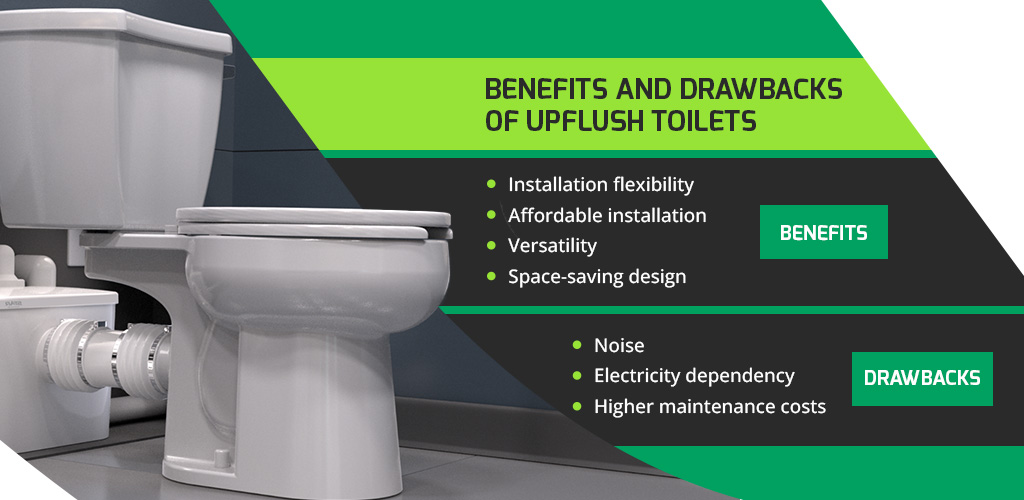
The benefits of upflush toilets include:
- Installation flexibility: The main advantage is that the system can be installed almost anywhere in the home for additional living space, including basements, garages and attics, because it uses a pump to send waste upward, bypassing the need to drill through floors or be located directly above the main sewer line.
- Affordable installation: Installing an upflush toilet is often more affordable than a standard one, as it avoids the costly and disruptive process of tearing up floors to install new plumbing.
- Versatility: You can connect additional fixtures like a sink, bathtub or shower to the system to create a full bathroom in a new location.
- Space-saving design: The system uses a small-diameter pipe, which can be as small as ¾ or one inch, making it ideal for small or tight spaces.
The following are cons of upflush toilets:
Higher maintenance costs: They have more moving parts that can wear out or become clogged over time, requiring more maintenance than simple gravity-fed toilets. Repairs can be more complex and expensive.
Noise: The macerator pump and grinding process can be noticeably loud during operation, which might be a concern depending on the toilet’s location within the home.
Electricity dependency: Upflush toilets require a power source to function. During a power outage, the toilet will be inoperable unless a backup power source like a generator is available.
Key Features to Compare in an Upflush Toilet
Selecting the right upflush system is about matching the machine’s capabilities to your project’s needs. Here are the core things you should consider as a savvy buyer:
Macerator vs. Grinder Pump
The heart of the system is the pump unit, and its type matters:
- Macerator pump: This is the standard for most residential applications. It uses fast-spinning, stainless steel blades to quickly and efficiently liquefy human waste and toilet paper into a slurry. It’s typically sufficient, quieter and more energy-efficient for a typical home bathroom used by family and guests.
- Grinder pump: A step up in power, grinder pumps utilize a heavy-duty cutting wheel capable of handling tougher materials. A grinder pump is a more durable option for areas where usage is less controlled and potentially damaging items might be flushed, offering better protection against clogs.
Pumping Power and Distance
The power of your unit is defined by how far and how high it can push the waste. This is crucial for success:
- Vertical pumping distance: This refers to the maximum height, measured in feet, at which the unit can pump waste vertically before connecting to the main drain line. This is vital for basement upflush toilet installations.
- Horizontal pumping distance: This is the maximum distance, measured in feet, that the unit can push the waste horizontally after any vertical lift.
Measure your required lift and run distance precisely, and choose a pump that slightly exceeds your requirements. This buffer ensures the pump doesn’t constantly run at maximum capacity, extending its life and ensuring reliable performance when supporting a shower or multiple fixtures.
Full vs. Half Bathroom Setups
Are you installing just a toilet and sink, or would you like a full, spa-like experience with a shower and tub? Consider this when choosing your upflush toilet. The key feature to look for here is the number of inlet ports on the macerating unit.
A unit designed for a half-bath typically has one or two smaller inlets for a sink and possibly a shower. A unit for a full bath will have multiple inlet ports and a greater flow capacity to accommodate the high volume of water from a shower or bathtub, which drains into the pump unit before being pushed to the main line. Ensure the system you buy is specifically rated to handle all the fixtures you plan to connect.
Toilet Bowl and Seat Design
Upflush systems offer the same bowl choices as standard toilets:
- Round bowls: The compact, space-saving choice, ideal for smaller powder rooms or tight closet-style bathrooms.
- Elongated bowls: Approximately two inches longer than round bowls, offering superior comfort and preferred by most homeowners for primary bathrooms.
- Comfort height: This feature raises the bowl height to a level comparable to a standard chair, making it much easier and more comfortable for adults to use.
Modern upflush systems often feature sleek, modern bowl designs that seamlessly integrate with the pump unit, resulting in a final installation that resembles a standard, high-quality residential toilet.
Water Usage and Efficiency
Many upflush toilets are designed with water conservation in mind. Look for models with a dual-flush system, which allows for a lower volume flush for liquid waste and a higher volume for solid waste, thereby saving water and reducing utility bills.
Choosing an Upflush Toilet
Explore upflush toilet options from Star Water Systems:
Powerflush Optima Upflush Toilets
The Powerflush Optima is a one-size-fits-all toilet solution that mounts on your floor. It can vertically transfer wastewater up to 20 feet high to your existing sewer line. You can connect it to your shower, bathtub or sink to dispose of used water. Choose from an elongated or round bowl and freestanding or extension kit installation to hide the pump behind your wall.
The Powerflush Optima uses a ⅓ horsepower macerator pump to cut any material that flows through it. It can’t run dry and is best for small solids like hair, plastic and wipes.
Powerflush Optima Pro
The Powerflush Optima Pro is a powerful system with a ½ horsepower grinder pump. The grinder pump has two blades to pulverize tough solids and send them to your septic tank or system. It can move waste up to 20 feet high to reach your septic system or tank. Like the Powerflush Optima, you can choose between an elongated or round bowl and install it practically anywhere. Unlike the Powerflush Optima, it can run dry and handle medium to large solids.
Get a Quality Upflush Toilet Today
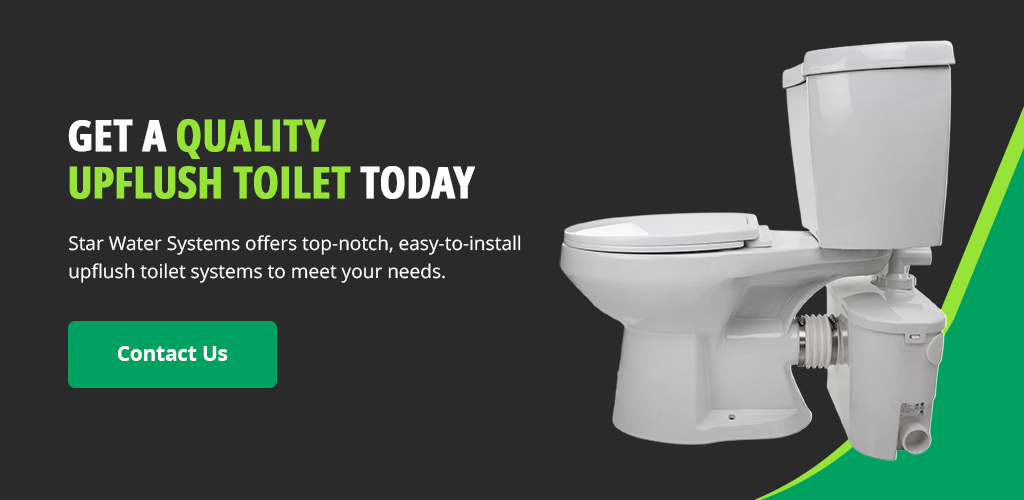
Upflush toilets offer a flexible solution for installing a bathroom almost anywhere in your home without expensive and disruptive construction. Star Water Systems offers top-notch, easy-to-install upflush toilet systems to meet your needs. Our upflush toilet systems are the simple solution to your complex plumbing problems. Contact us today to learn more about our products.