Any equipment will experience issues over time, and a sump pump is no exception. This vital piece of equipment keeps water moving out of areas vulnerable to moisture and flooding, protecting your home and keeping your valuables dry.
We understand the sinking feeling of realizing your pump is underperforming or has stopped working. Sometimes, an issue is a simple fix, and other times, you may need a replacement component.
Quick action can prevent thousands of dollars of water damage, so it’s vital to know how to spot the most common sump pump problems and whether you can fix them yourself or need to call a professional.
The 4 Most Common Sump Pump Problems
From faulty outlets to clogs, this list will help you understand and troubleshoot common sump pump issues:
1. Your Sump Pump Will Not Start
If your pump is lying silent while there is a rainstorm blowing in, it could be because of the following issues:
- A switched-off circuit breaker: Check your home’s breaker panel to see if all switches are on — if not, reset the breaker.
- A malfunctioning outlet: If you’re not getting power, confirm your pump is connected to the outlet. If it is, test it with another device to determine if the outlet or the pump is causing the issue. You should also have a ground fault circuit interrupter (GFCI) installed.
- A blown or loose fuse: Fuses protect your equipment from current surges — they blow and break the circuit to protect other components. Check your user manual for the location of fuses and call an electrician to remove or replace them.
- A low basin water level: A sump pump is only supposed to turn on once its basin reaches a certain level, and if that’s too low, it won’t turn on, even if there is visible water. In this case, it is not an issue, just an aspect of its design.
- An obstructed pump float: The float is part of the mechanism that measures the water height and tells your pump to switch on. Debris can cause it to become stuck and delay the sump pump’s activation.
2. Your Sump Pump Runs Continuously
Your pump should shut off automatically when the water level reaches a specified height in the sump pit. However, if it runs continuously, the cause could be:
- An undersized system: If you’re experiencing heavy rains and your sump pump is undersized, it will run continuously to try and keep up. If the water level stays the same or increases, you probably need a higher-capacity pump.
- A defective float: Sometimes, a float becomes defective, so the pump will run even when it’s in the off position. In this case, you’ll need to replace the float switch.
- A clogged discharge line: This line carries water away from the pit, so if it’s clogged, the pump will continue running without returning water. If it’s blocked, it may lead to a line rupture or increased wear and tear.
3. Your Sump Pump Is Noisy or Vibrating
Some noise and vibration are normal. If your sump pump starts to make grinding, scraping or high-pitched squealing sounds, or it’s rattling and clattering, these sounds may indicate:
- A debris-filled impeller: The motor drives the impeller, moving the water out of the pit. Pebbles, grit, dirt and other debris can get into it, causing the pump to vibrate and make grinding sounds. It’s best to clear it before it causes component damage.
- An air-in-line issue: If air is trapped somewhere in the system, you may hear a loud buzzing or rumbling noise. Ensure the intake is fully submerged, and clean the intake screen to clear the air out. You can also get a professional to drill an air relief hole to prevent further airlocks.
- A loose or resonating pipe or line: If a line is loose or leaning against a wall or floor, it will resonate, and you may feel a vibration in floors and walls around the sump pump. You can add pipe supports and isolate with rubber where pipes touch wood or concrete.
4. Your Sump Pump Is Inefficient
If you notice your pump is running but draining little to no water, this could be the result of:
- An improperly installed check valve: The check valve prevents backflow into your system. If it’s faulty, it could cause less or no water to flow out, and you’ll need it replaced.
- A worn impeller or blocked pump inlet: If your impeller is worn or the intake is clogged, this will reduce flow and make the pump motor work harder to overcome the blockage. You’ll need to clean the intake and, if necessary, replace the impeller.
- A miscalculated vertical pumping distance: If you have a new sump pump installation but notice it’s not removing as much water as it should, it may be because the motor is underpowered for the vertical distance it needs to pump the water. You’ll need to contact a professional to reroute or replace pipe fittings so the impeller can push the water up.
Preventing Sump Pump Problems

The best way to prevent sump pump issues is to carefully read your user manual, conduct regular preventive maintenance and call a professional if you still have questions. You can perform the following simple tasks regularly and after heavy storms. Remember to always unplug the pump before doing any work:
- Do a water test: Outside of the rainy season, pour water into your pit to ensure the pump starts and stops properly.
- Clean the pit and intake: Unplug the pump and remove any buildup of silt and debris in your basin, cleaning the intake and impeller too.
- Verify float movement: During a water test, you can verify that the float moves freely.
- Inspect valves and lines: Confirm that the check valve arrow is pointing up or away, and ensure your discharge line is unkinked, and the outdoor outlet is clear.
- Confirm uninterrupted power: Inspect the outlet and power cables for damage. Ensure your circuit breaker panel is in working order.
DIY or Call a Pro? How to Know When It’s Time for Expert Help
While there is satisfaction in fixing and maintaining your own equipment, there are times when you’ll need to contact a local professional to help diagnose, repair and replace components — for example, resizing for vertical pump distance or rerouting discharge. You should call immediately if you notice any of the following:
- Electrical hazards like faulty wiring, a blown fuse or a broken outlet.
- Imminent flooding, and the pump won’t start.
- Burst lines that need replacement.
Contact a professional if you’ve done basic checks like freeing the float, cleaning the intake and checking the pit’s water level and the following issues are still present:
- Continuous running
- Grinding, whining and severe vibrations
- Weak or no water flow
- Aging pump with reduced performance
Why Choose Star Water Systems for Your Sump Pump Needs?
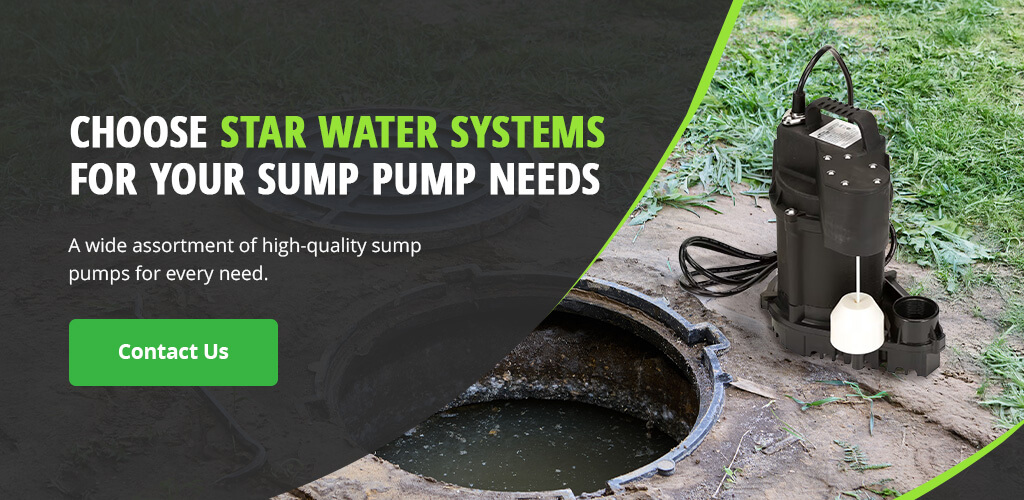
Now that you know the 4 common sump pump problems and how to fix them, you can create a maintenance schedule and know when to call a professional. If no fixes are working or your sump pump is at the end of its life, Star Water Systems provides a wide assortment of high-quality sump pumps for every need.
Contact us today for more information, or find a retailer near you to purchase our products!